


[1/3]Sunset clouds glow over pump jacks at the Airankol oil field operated by Caspiy Neft in the Atyrau region, Kazakhstan, April 21, 2026. REUTERS/Pavel Mikheyev
LONDON/SINGAPORE, Aug 3 (Reuters) - Signs that U.S.-Iran tensions were easing again set Wall Street up for a positive start to August, weighing on crude prices and lifting stock futures, while investors prepared for another week packed with earnings and economic data.
Pre-market trading had S&P futures up 0.6% and Nasdaq futures 0.4% higher.
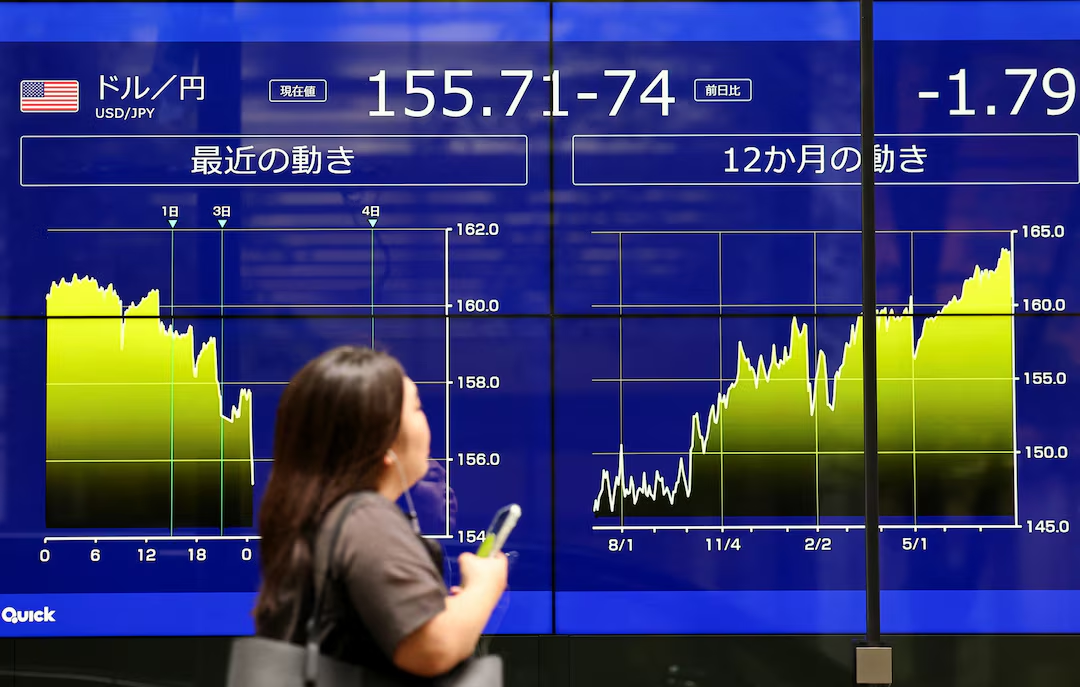
Oil prices fell sharply while European stock markets continued their climb. The yen firmed to a three-month high after the U.S. and Japan confirmed joint intervention to support it.
Brent crude futures sank $4.40, more than 5%, to $83.52 a barrel after U.S. President Donald Trump said talks with Iran would take place on Monday. He had earlier called off an attack on Iran to pursue a deal to reopen the Strait of Hormuz.
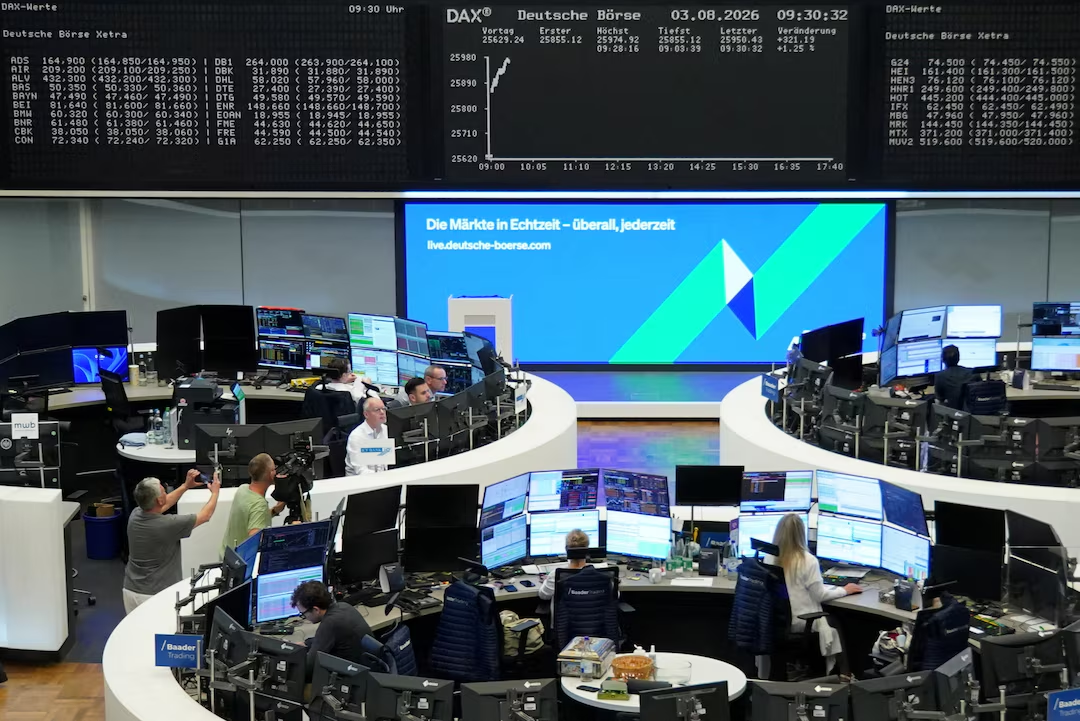
European shares rose 0.4% to start August on a firm note. The German DAX notched an intra-day record and was last up 1.4%.
"For equity markets, the fundamental picture remains encouraging," said Bruno Schneller, managing partner at multi-family office Erlen Capital Management.
"Earnings have generally held up well, and companies with strong pricing power and resilient business models continue to outperform."
Over half of the S&P 500 component companies have reported earnings so far, with 86% of firms beating earnings expectations, research on Monday from Florian Ielpo, head of macro at Lombard Odier Investment Managers, noted.
Traders also weighed potential consolidation in the healthcare sector, after a report said Bristol Myers Squibb and AstraZeneca had held preliminary merger talks about possibly creating the world's biggest drugmaker, worth nearly $400 billion.
AstraZeneca shares at one point dipped almost 7% on reports of the potential tie-up.
Asian stocks struggled as the new month began after a turbulent July marked by wild swings as investors fretted over massive capital spending on AI and whether it will provide returns quickly enough.
Japan's Nikkei closed 1% lower, while South Korea's KOSPI slid more than 5%. This weighed on the MSCI's broadest index of world shares , leaving it flat.
YEN BEARS COWER AFTER JOINT INTERVENTION
The Japanese yen strengthened over 0.5% to 156.77 per U.S. dollar after a jump earlier in the day to its strongest since early May at 155.2, putting traders on alert for another bout of intervention.
Japan and the U.S. conducted coordinated yen-buying and will not hesitate to take further action, Japan's Finance Ministry said on Monday, confirming a rare bilateral action to halt the yen's slide to 40-year lows.
U.S. Treasury Secretary Scott Bessent also said the United States would consider increasing in coming months the size of the Federal Reserve's repurchase facility providing temporary dollar liquidity, calling the tool an "important backstop".
"Bessent's comments arguably carry more weight than the intervention itself," said Matt Simpson, senior market analyst at StoneX. "It feels like a safe bet that the Japanese yen has troughed for the year. The words 'joint intervention' carry a lot of weight in these markets and is a term rarely used."
Trump said on Sunday the United States was helping Japan prop up the yen as a sign of friendship and to help the world economy.
Tokyo's solo intervention conducted between late April and early May caused only a brief yen rebound, while a rate hike in June by the Bank of Japan provided little support, underscoring the challenge policymakers face of rising oil prices and a wide interest-rate differential against other major economies.
The yen had been rooted near 40-year lows around 164 per U.S. dollar in recent weeks before the latest interventions, with net short yen positions of roughly $12.5 billion, the highest in two years, data from a U.S. regulator showed.
Bessent repeated calls for further interest-rate hikes by the Bank of Japan.
Elsewhere, U.S. Treasury yields retreated as oil prices fell.
The yield on the 30-year bond fell over 5 basis points to around 5.22%, easing away from the 19-year high it touched last week.
It had soared around 37 basis points in July as investors grappled with confusion around the Iran war and the policy outlook for the Federal Reserve.
Reporting by Nell Mackenzie in London and Ankur Banerjee in Singapore; Editing by Barbara Lewis and Kevin Liffey
Our Standards: